
A tough career change led to something better
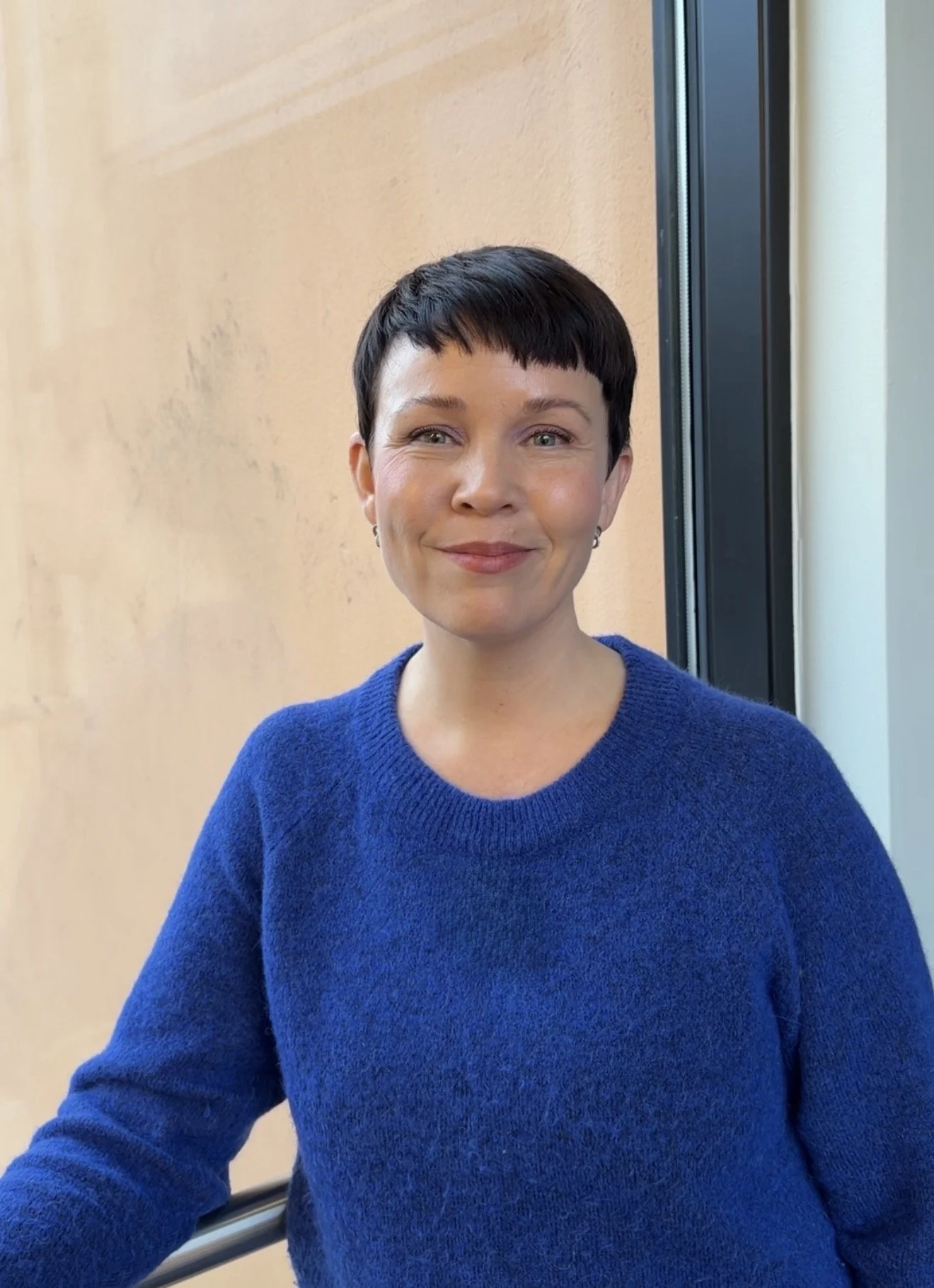
From a hospitality management graduate to a café and restaurant manager. Then to a psychiatric nursing assistant, and now as an occupational health secretary at TT Botnia—that’s my career path. It has been both personal and rewarding, involving a career change, but it has also cost me one burnout. And it has taught me a great deal about the formula for staying energized and happy at work.
How do you know if you’re happy at work?
When you have worked in different fields, in different roles, and at various levels of a traditional hierarchy, you gain an incredibly good understanding of what factors most influence your ability to cope and enjoy your work.
In my current role as an occupational health secretary, I act as a link between clients and the entire staff, from nurses to doctors and the service manager. My job satisfaction would immediately suffer if I had to feel tense about collaborating with anyone. When the situation is the opposite, as it is here, not a single important detail for the patient, or even a joke that brightens the day goes unsaid.
A good way to measure this is to reflect:
Is it easy to laugh with your colleagues, and do you smile often enough?
Do you feel comfortable asking questions multiple times?
Is there flexibility when everyday realities suddenly affect the workday?
It is clear that job satisfaction does not have to mean constant joy or unlimited freedom. What matters is this: does your work community drain your energy, or does it give you strength?
Create Your Own Intangible Business Card Through Micro-Networking
Does networking feel distant or intimidating? It is worth approaching networking positively, not only for your career but also for your well-being. Networking is not just about formal events or LinkedIn, even though it is often discussed that way. Surprisingly small things, like quick encounters and subtle meanings between the lines, are also networking and a form of micro-networking.
In the moment, it may not feel like “now I am networking,” yet those are exactly the moments that shape your intangible business card.
A strong network naturally impacts your career development; the relationships you build and the impression you leave can lead to a new job, promotion, or educational opportunities. On an everyday level, however, an even more important impact is on your well-being. Networks support your ability to cope and grow at work in a much broader sense.
A good workplace community is often your closest professional network. It forms the foundation of your professional self-confidence. In my work, people are always at the center, whether they are clients or patients. I believe workplace hierarchy can and should be challenged if it leads to better care or service.
In healthcare, practical nurses spend a lot of time with patients, and for many occupational health clients, the secretary is the first point of contact. I trust my intuition and life experience, and I am not afraid to express my views. This is how professional self-confidence grows, especially within a supportive work community.
Decision-Making Is Courage
It is often said that courage is not the absence of fear, but the willingness to act despite it. I would not describe myself as someone who dares to jump into the unknown and I do not see myself as particularly brave in that way. However, I believe I have a different kind of built-in courage, specifically for those moments when decisions need to be made.
My courage has been about having the strength to make the right decisions for myself at the right time.
Perhaps others can relate to being in a situation where the work community is good and the work feels meaningful, yet something still is not right. I truly enjoyed my job as a supervisor in the restaurant industry; the team was wonderful, and the days were interesting. But my energy levels were under pressure. In the midst of busy years, my personal resources simply were not enough.
I realized this far too late, I only left the field after hitting a wall completely. The result was severe burnout and a long sick leave.
“The career change could certainly have been made in a gentler way.”
After my sick leave, I retrained and moved into healthcare. The transition could likely have been smoother, but in hindsight, I feel it had to happen this way. And since then, I have also had the courage to change jobs within the healthcare field, even from one good workplace to another.
I enjoyed working in psychiatric care and with people with disabilities, and the work felt meaningful. Leaving such a role requires courage, the courage to decide. It feels almost foolish to take a risk and leave when everything is, in principle, fine, but your mind is calling you in another direction.
Burnout resulted in more than just sick leave: it took years before I could work full-time again. In my current role, that has finally become possible and most importantly, I now have energy for life outside of work as well.
Over the years, I have also learned to listen more carefully to my own well-being.
I would not change anything about the past, because who knows where I would be otherwise. My current job feels perfectly suited to my personality. It is genuinely diverse, my days vary, and it brings together my skills in an incredible way. Best of all, my work community is truly exceptional.
Mirva Myllykangas,
TT Botnia