
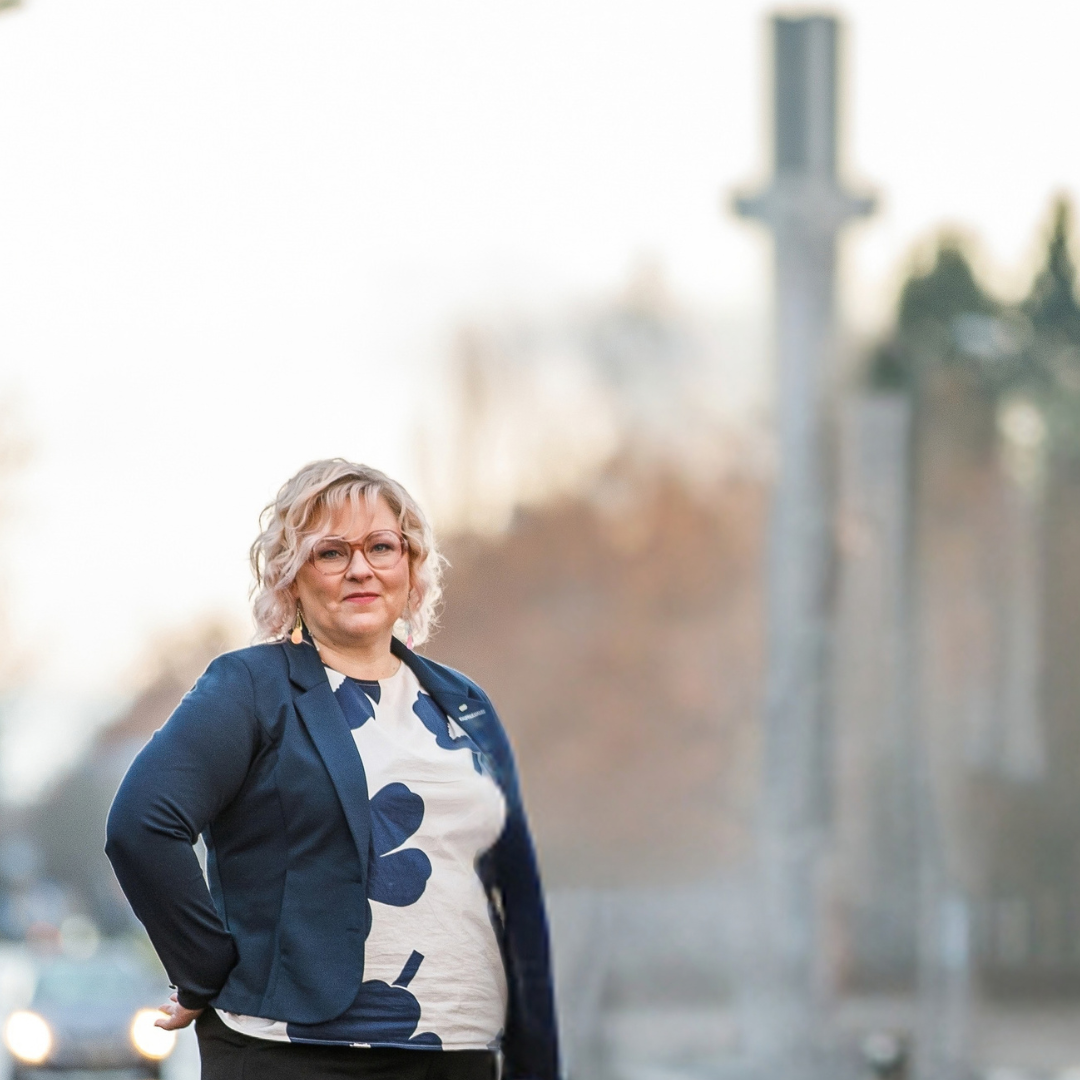
Fortunately, corporate boards are discussed much more today than they were just a few years ago. An increasing number of companies are considering what kind of board truly supports business growth and development, what expertise is needed on the board, and whether its current composition provides the added value that should be expected of it.
At the same time, discussions about board diversity have increased, with particular attention recently being given to the number of women on boards. This discussion is important, but in my opinion, percentages alone do not tell the whole story. What is even more interesting is to consider who sees themselves as a suitable board member in the first place.
Many competent women may still think that securing a board position requires a long career as a CEO, a background as a CFO or years of experience in board work. That they first need a little more education, more experience, and perhaps one day they will be ready.
But you don't have to be born ready for board work.
There Are More Women on Boards Than Before, but the Work Is Not Done
Developments in Finland have been moving in the right direction. According to the Finland Chamber of Commerce's 2026 review of women in leadership, the proportion of women on the boards of Finnish listed companies has risen to a record 37 per cent. In large listed companies, the proportion is already 42 per cent, compared to 38 per cent in medium-sized companies and 33 per cent in small listed companies. Women also accounted for 46 per cent of new board appointments.
This development is not solely the result of changing attitudes. Ville Kajala, Leading Expert at the Finland Chamber of Commerce, also highlights the revised recommendation in the Corporate Governance Code, which requires balanced representation of women and men on boards. The deadline for achieving this target was the end of June 2026.
“The significant increase in the proportion of women demonstrates listed companies' commitment to self-regulation, as the statutory quota targets apply to only 34 listed companies,” says Kajala.
Corporate boards certainly do not need women simply to make the statistics look better. They need diverse expertise, experiences, perspectives and people who dare to ask the questions that others do not.
A good board is not a collection of like-minded people.
“Could I Be a Board Member?”
The article More Women on Boards, available on the HHJ website, addresses this topic well. In the article, board professional and entrepreneur Helene Auramo highlights an interesting observation. According to her, one factor that may hold women back in their board careers is a lack of confidence in their own expertise.
Auramo's advice, however, is encouraging: naturally, you need to understand the fundamentals and responsibilities of board work, but after that, it is worth building on your own strengths and developing your unique expertise.
In reality, a company's board may need precisely the expertise you already have. Board work encompasses a wide range of responsibilities, from guiding strategy and monitoring finances to identifying risks and ensuring good corporate governance. Boards therefore need diverse expertise and the ability to look ahead.
Sometimes, it might be worth asking yourself, in true South Ostrobothnian fashion: well, why not me too?
In the article, Auramo also points out that new board members are often recruited through existing networks. If the network is very similar to the current board, the candidates are also likely to resemble the people already sitting around the table. Both companies and those interested in board work share responsibility in this regard. When renewing its board, a company should take the time to consider what expertise it will need next, rather than simply considering whom the owners or current board members happen to know.
Those interested in board work, in turn, should make their expertise visible, express their interest and build their networks. Few people would think to offer a board position to someone whose interest they are unaware of.
You Can and Should Develop Your Expertise
There is also much about board work that needs to be learned. Board members have duties and responsibilities that differ from operational work. They need to understand the role of the board, strategic planning, finance, risk management and the principles of good corporate governance.
The Approved Board Member (HHJ) course examines board work particularly from the perspective of small and medium-sized enterprises. The training covers all the areas mentioned above. Preparing for board work does not mean that you first need to become someone else. Rather, it is about recognising your existing expertise, complementing it and acquiring the knowledge and skills required for board work.
Perhaps You Are the Next Board Professional
Increasing the number of women on boards is not solely the responsibility of women. Companies and owners must also consider where they look for board members and what kind of expertise will be needed on the boards of the future.
At the same time, perhaps we as women should occasionally lower the bar we set for ourselves when deciding whether we are “ready enough”. You do not need to know everything, and no individual board member knows everything on their own.
What matters more is recognising what you bring to the table, learning the rules of board work and having the courage to say out loud:
“I am interested in board work.” – That could be where it all begins.
Sources
Keskuskauppakamari (9.7.2026): Naisten osuus pörssiyhtiöiden hallituksen jäsenistä uuteen ennätykseen – osuus nyt jo 37 prosenttia.
HHJ-artikkeli: Lisää naisia hallituksiin. Helene Auramo.
https://hhj.fi/fi-fi/article/uutiset/lisaa-naisia-hallituksiin/653/