
Many Women Could Become Entrepreneurs – But They’re Still Waiting
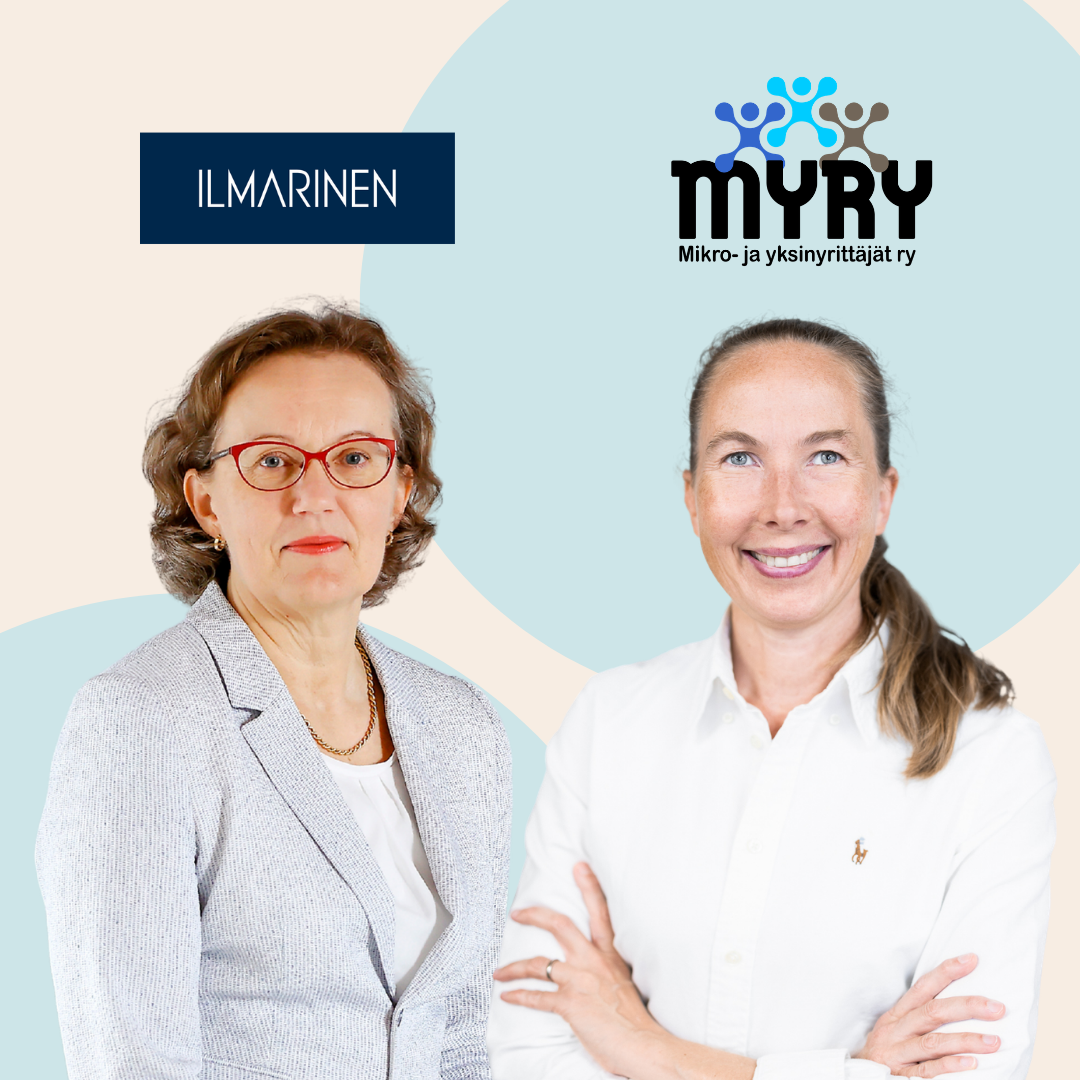
The number of female entrepreneurs has remained fairly stable in recent years: about one in three entrepreneurs in Finland is a woman. Entrepreneurship is therefore not a foreign or daunting concept for women, women do indeed start businesses. But something is preventing them from taking that first step, and they keep putting it off.
Where Are Female Entrepreneurs – and Where Are They Not?
In Finland, women’s entrepreneurship is often concentrated in small-scale businesses within service industries, expert work, wellbeing, and everyday services. These are sectors where value is created, but which rarely make headlines.
In growth companies and export-driven businesses, women are still fewer, as they are among employer-entrepreneurs. Not because women lack the skills or courage, but because the rules of entrepreneurship still favor rapid, capital-intensive growth and high risk, something that does not fit everyone’s life situation.
What Needs to Change for More Women to Become Entrepreneurs?
Finns have become more positive toward entrepreneurship, but many young people and women do not want to commit to full-time entrepreneurship. It is seen as interesting and respected, but not necessarily safe.
Entrepreneurial ways of working have increased, and many are experimenting with temporary or part-time entrepreneurship. When you don’t have to put everything on the line at once, the threshold becomes lower. Today, many people move forward at their own pace, testing whether they dare to take the final leap. The kind of entrepreneurship that attracts is one that doesn’t immediately require employees, loans, or sleepless nights.
There are plenty of stories about startup millionaires. However, far less attention is given to women who run profitable small businesses, combine entrepreneurship with everyday life, and grow steadily and intelligently. When entrepreneurship is portrayed more broadly and starts to look like “this could be me” – more women recognize themselves in it, and entrepreneurship becomes a realistic option.
Security and Courage on the Path of Working Life
Social security, parental leave, and situations such as illness are not minor details, they are key factors when deciding whether to take the leap into entrepreneurship. The pension reform for entrepreneurs presented by the government makes the system clearer and more predictable. From 2028 onwards, if entrepreneurs base their pension contributions on earned income, the payments will align with their actual income, making financial planning easier.
Women do not need to be encouraged into entrepreneurship, the interest and competence already exist. What is needed is a bit more courage, more willingness to take risks, and above all, greater visibility for female entrepreneurs. When these pieces fall into place, it will no longer be surprising that more women choose to become entrepreneurs.
Liisa Hanén: “The Bold Leaps of My Life – and Why I Would Do It Again”
Looking back at my career and working life, there hasn’t been one clear path, but rather a series of conscious leaps into the unknown. I haven’t built my career on certainty, but on curiosity. More often I’ve said “let’s try” than “let’s wait.”
The first big leap was moving to England to study media and film, and deciding to stay there to work. I ended up working at the BBC in London for several years. It was, in many ways, a dream job: international, high-level, and full of continuous learning. At the same time, I learned that by daring to go, you can end up in places you could never have imagined.
The second leap was returning to Finland. I left behind my life in England and rebuilt my career in the media industry in Finland. It reinforced the idea that you can change direction, change countries, simply because you want to.
The third leap was the boldest so far. I became an entrepreneur. I built my work as a consultant in media, copyright, and communications. That phase quickly taught me that no one else will define what you are capable of, your potential only grows when you use it. At the same time, I had to take responsibility for my finances in a completely new way.
The fourth leap was even bigger. I changed industries entirely, moving into the sports sector. I moved to Spain and became an employer. Suddenly, I was no longer just building my own work, I was running a larger company in a foreign country. It was so demanding that I don’t even remember everything from that time. But it was also incredibly educational. I became used to living with uncertainty.
The fifth leap wasn’t entirely my own choice, but a result of the pandemic. I returned to Finland and paused to reflect: what do I want to do? Where do I want to use my potential?
The sixth leap led to the creation of the Association of Micro and Solo Entrepreneurs. I saw a clear need for a new organization and decided to build it. In this role, I can use everything I’ve learned – communication, entrepreneurship, and societal understanding, and do work that truly matters.
When Has It Felt the Most Scary?
Every single time before a leap.
But I’ve learned to ask myself one question: What is the worst that could happen? Unemployment? More debt? Criticism from others?
When you write your fears down, you realize something essential: none of them are final. You can survive them all and you can learn from them. And often, the worst fears are much smaller than the opportunities you miss if you don’t dare to try. Along the way, what has helped me most are genuine networks, hard work, and the ability to tolerate imperfection. Networks are not about exchanging business cards, they are about people with whom you can share ideas, ask for advice, and sometimes even fail out loud.
Hard work moves you forward even when things are not ready and doubt begins to creep in. You must accept being unfinished. When you start something new, you are not immediately good at it, and you don’t know everything and that’s something you have to tolerate. Confidence is built through doing.
You are capable of anything. You have an enormous amount of skills and knowledge that you may not even recognize yet. Don’t diminish yourself in advance. Don’t wait for permission. Don’t create limits for yourself that no one else has set.
A career is not a straight line and it doesn’t have to be. It can be a series of leaps, changes in direction, and mistakes.
What matters most is that you use your potential.
Minna Hakkarainen,
Department Head, Ilmarinen
Liisa Hanén,
Executive Director, Myry