
Finnish Women’s Experience of Working Life – What Do Women Expect from Working Life?
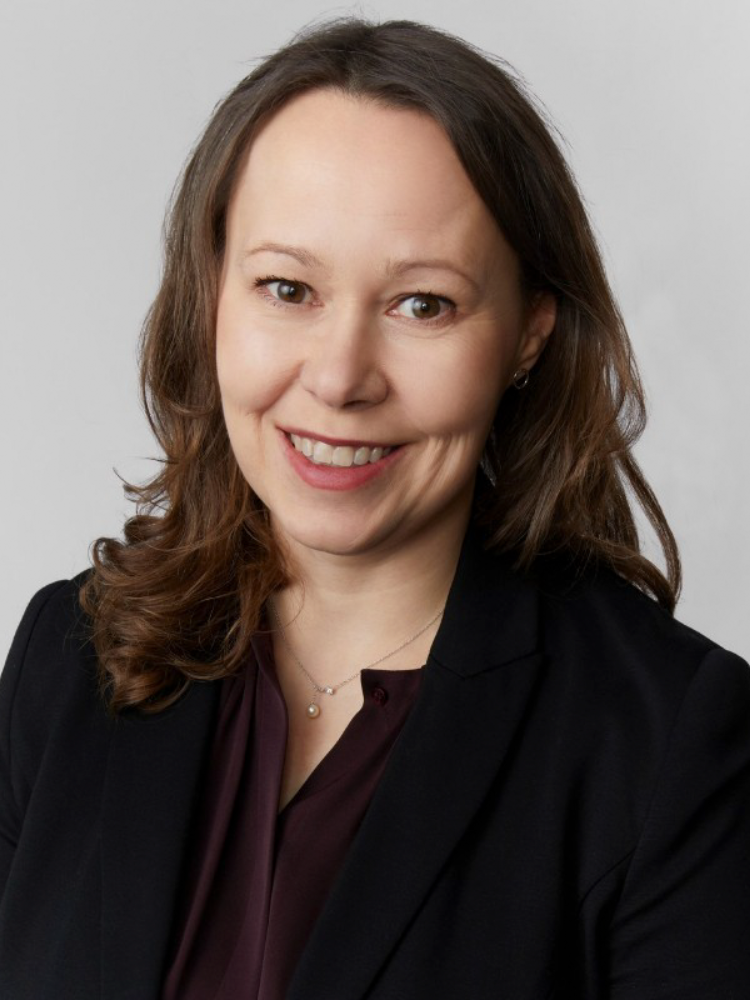
When was the last time you stopped to think about whether what you do truly feels meaningful?
I often pause to reflect on this question myself. In the role of CEO, the meaning of work is not created only through results or numbers, but above all through people and how successfully we create an environment where everyone feels that their work matters and has an impact.
According to Adecco’s international Global Workforce of the Future study published in 2025, however, only one in ten Finnish women feels that their work is meaningful on a daily basis. This is an especially low figure for a country often considered a model for equality in working life. At the same time, the study shows that Finnish women are committed, flexible, and highly adaptable to change.
If women participate, adapt, and take responsibility, why is the experience of meaningfulness in Finland still so weak? What do we actually expect from working life, and why are these expectations not being fulfilled?
In this article, I examine the results of our working life study specifically from women’s perspective and reflect on what they reveal about leadership, workplace structures, and the true nature of inclusion. I also compare these findings with my own experiences as a CEO.
Participation Does Not Mean Inclusion
One of the most interesting findings in our study relates to participation. Finnish women experience participation in everyday workplace situations such as speaking up in meetings and expressing their own opinions as even easier than men do. As many as 32% of women consider participation very easy, while the corresponding figure for men is only 20%.
We women are therefore part of the conversations. We are also more willing than men to adapt to changes in working life, whether related to artificial intelligence or changes in the work environment. I see this primarily as a strong ability to adapt to change, but at the same time I wonder whether uncertainty has become such a permanent part of working life that women have simply learned to live with it.
Interestingly, women do not see the opportunity to participate itself as the problem. But the opportunity to participate does not automatically mean the opportunity to influence. In working life, it is not enough simply to have your voice heard. What matters is that people feel genuinely listened to in a meaningful way. If people feel that their contribution leads nowhere, participation can easily become superficial.
Leadership Is Built on Understanding the Bigger Picture
In my own career path, the themes highlighted in the study participation, influence, and adaptability, have become concrete in many ways. I joined Adecco as CFO in 2018 and familiarized myself thoroughly with the company’s financial situation and structures. Over time, however, my focus increasingly shifted beyond the numbers.
As CEO, my responsibility extends across the entire organization and, above all, to the people within it. At the core of my leadership is the ability to combine financial realism with human-centered leadership. Although the experience of meaningfulness is highly individual, leaders have both the ability and the responsibility to influence how meaningful everyday work feels.
When people understand why decisions are made, where the organization is heading, and what is expected of them, they also experience their own role as more important.
Meaningfulness Cannot Exist Without Inclusion and Safety
The meaningfulness of work is connected to job satisfaction, motivation, and commitment, among other things. Finnish women’s experience of meaningful work is surprisingly low in international comparison. Globally, nearly half of female employees experience their work as meaningful every day in Finland, only 10% do. Finnish men also experience more meaningfulness in their work than women.
The study shows that for women, meaningfulness is primarily linked to job security, opportunities for development, and the content of the work itself, while men place more emphasis on the team and the meaningfulness of work in itself. In my opinion, the findings show that meaningfulness is not created merely through the opportunity to work and participate. The experience of meaningfulness becomes stronger when individuals can grow in a safe working environment and feel that their contribution is an important part of the bigger picture.
Safety is therefore one of the key elements of meaningfulness. Safety creates predictability, fairness, and psychological security. In a safe environment, individuals develop stronger resilience, which in turn is a major strength and genuine competitive advantage for organizations. In our study, women also emphasized support for mental health and wellbeing as a key factor in coping with change and maintaining resilience.
The same applies to inclusivity. Only 12% of Finnish women feel that their workplace is genuinely inclusive. However, it is encouraging to see that one-third of Finnish women feel that their employer takes the safety of employees from different backgrounds into account better than in previous years. In my opinion, inclusivity is not about what an organization claims to do, it is created through everyday experiences. If individuals do not feel genuinely seen and heard, it is not simply a personal feeling; it is a sign that the organization’s culture and structures still do not align.
Participation Without True Inclusion
According to our working life study, Finnish women’s experiences of working life are shaped by the tension between expectations and workplace structures. Women participate, adapt, commit, and take responsibility, while simultaneously expecting greater opportunities to influence, fairness, meaningfulness, and genuine inclusion.
As a representative of a global HR services company and through my own professional role, I believe that we have every opportunity to build a better working life. Finland possesses enormous talent, adaptability, commitment, and potential. When these strengths are combined with inclusive and human-centered leadership, we strengthen the experience of meaningfulness and create a more equal and sustainable working life.
Suvi Onkamo-Häkkinen,
Country Head
Adecco