
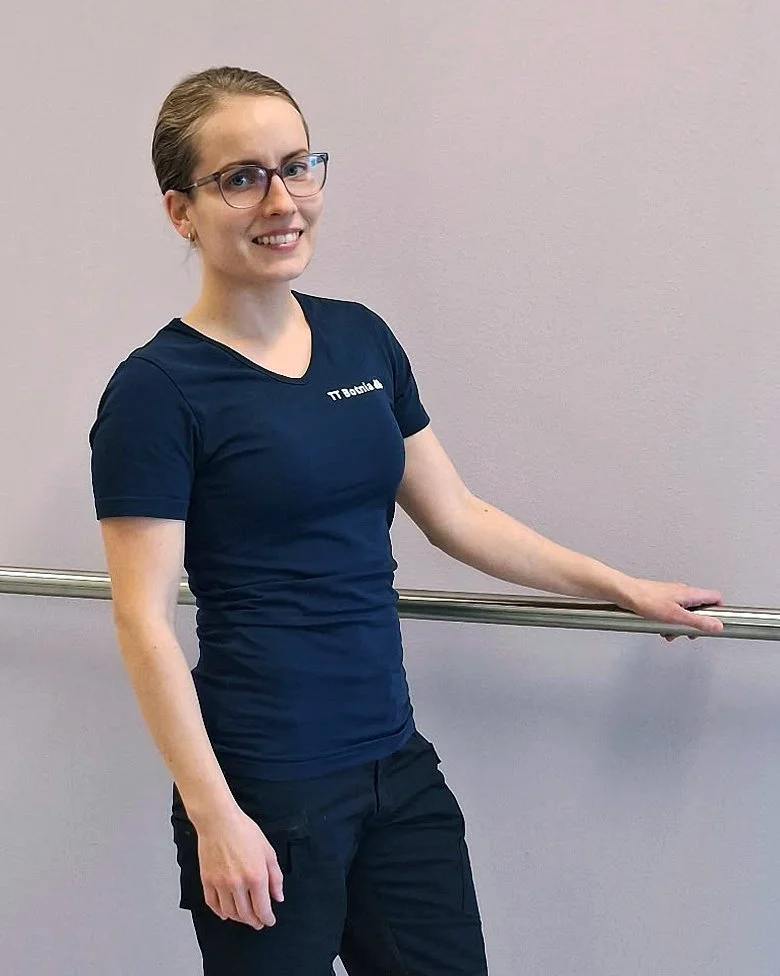
When you look at the world from the perspective of an occupational health professional, you gain a surprisingly broad understanding of the state of today's working life. At TT Botnia, we see a wide range of challenges and situations that individuals and organisations face every day, as well as what collaboration and working within different networks look like. I would therefore like to share five of my thoughts on today's working life and its challenges.
1. "We Are Never Completely Finished. That Is an Opportunity."
Legislation changes. Knowledge is updated. New tasks emerge, while old ones are forgotten. Staying up to date is part of professional competence. We must accept that change is a natural part of working life. My working day may turn out completely differently from what my calendar suggested in the morning. It is demanding, but it is also part of what makes the work interesting.
In other words, being a work in progress does not have to prevent us from taking action. It is important to give ourselves the opportunity to learn, grow, and develop, even when everything is not perfect.
2. "It Is Okay to Disagree, but Good Arguments Are Often Needed"
I have never held a managerial position, but throughout my different roles, I have made it a habit to openly raise suggestions for improvement and point out issues that need attention. I have received valuable reassurance that it is okay to disagree, as long as I am prepared to provide good reasons for my views. I believe and hope that there will always be room for a willingness to improve, critical thinking, and well-founded arguments, also in the future.
It is not necessarily worth waiting for improvements to be handed to us. What truly moves things forward is development that involves people and encourages their participation.
3. "Networks Are Not an Additional Task, but the Core of the Work"
Occupational healthcare is certainly not the only field where networks are at the heart of the work. In everyday life, we operate on many levels and within several different networks. Here are a few examples:
Individual clients and client workplaces. Other healthcare providers, Kela (the Social Insurance Institution of Finland), insurance companies, and rehabilitation service providers. Our multidisciplinary team and work community. System suppliers, training programmes, and development projects.
All these networks can be part of the task list on a single desk. The ability to work within networks is therefore not just something that happens alongside our work, but an essential requirement for professional expertise.
4. "Courageously and Honestly, but Always with Respect"
Following on from point 2, courage and honesty never exclude respect. Honesty is an essential part of my professional ethics, but never at the expense of respecting others. Difficult issues can be raised, but they can be addressed in a way that maintains trust.
Mutual understanding is the best possible outcome, and it leads to the best solutions.
5. "Courage Means Being Honest with Yourself"
This is not always the easiest point. It may involve setting personal boundaries, recognising your own resources and limitations, or acting in accordance with your values.
We all have a limited number of hours – both at work and in life. Acknowledging this and acting in your own best interest is a strength.
Outi Koskela
Occupational Health Nurse, TT Botnia